Ben Dalziel · Product
Deciding whose needs come first.
Every choice could be made for the league, for a sponsor, or for the fan. Building for the fan was the only one that delivered for the other two.
Case Study 04
Partner
Major League Show Jumping
Category
Show jumping · CSI5*
Engagement
2025–Present
Scope
The short version
Fans get more of the sport, the league gets fans it can name, and sponsors get an audience worth backing.
Who built it
Ben Dalziel · Product
Every choice could be made for the league, for a sponsor, or for the fan. Building for the fan was the only one that delivered for the other two.

Catalina Florea · Design
Going modern risked losing the polish the sport is built on. MLSJ asked for both, which meant the answer wasn't just a new color.

Shawn Robinson · Backend
The league's records were built for running competitions, not for following them. Turning them into something worth reading meant deciding what a fan would actually want to know.

Luke Wojewoda · Frontend
Standings change while a round is still going, and the running order changes with them. Getting that right on a phone, live, is nothing like posting results afterwards.

Casey Gullickson · Product Operations
Automated doesn't mean unattended. Every event still needs someone watching results land, and fixing what doesn't before a fan notices.
The starting point · Where we came in
Since 2021 MLSJ has run a real CSI5* circuit: eight to ten events a season, $12M in prize money, the best riders in the discipline. It had a website and an app with shows, results, standings, venues and athletes. And it had fans who knew the sport and followed the circuit.
What it wanted next was growth: reach people who don't already follow show jumping, know who its fans are, give them a reason to come back between events, and build an audience sponsors would pay to reach.
What growth needed
New fans needed a way in. A results table only makes sense to someone who already knows what matters, and results posted after a class ended couldn't be followed live.
Existing fans needed a reason to come back. There were no accounts, so the league never learned who showed up, and nothing happened between events.
Growing sponsorship depends on both. Sponsors pay for the size of an audience and how engaged it is.
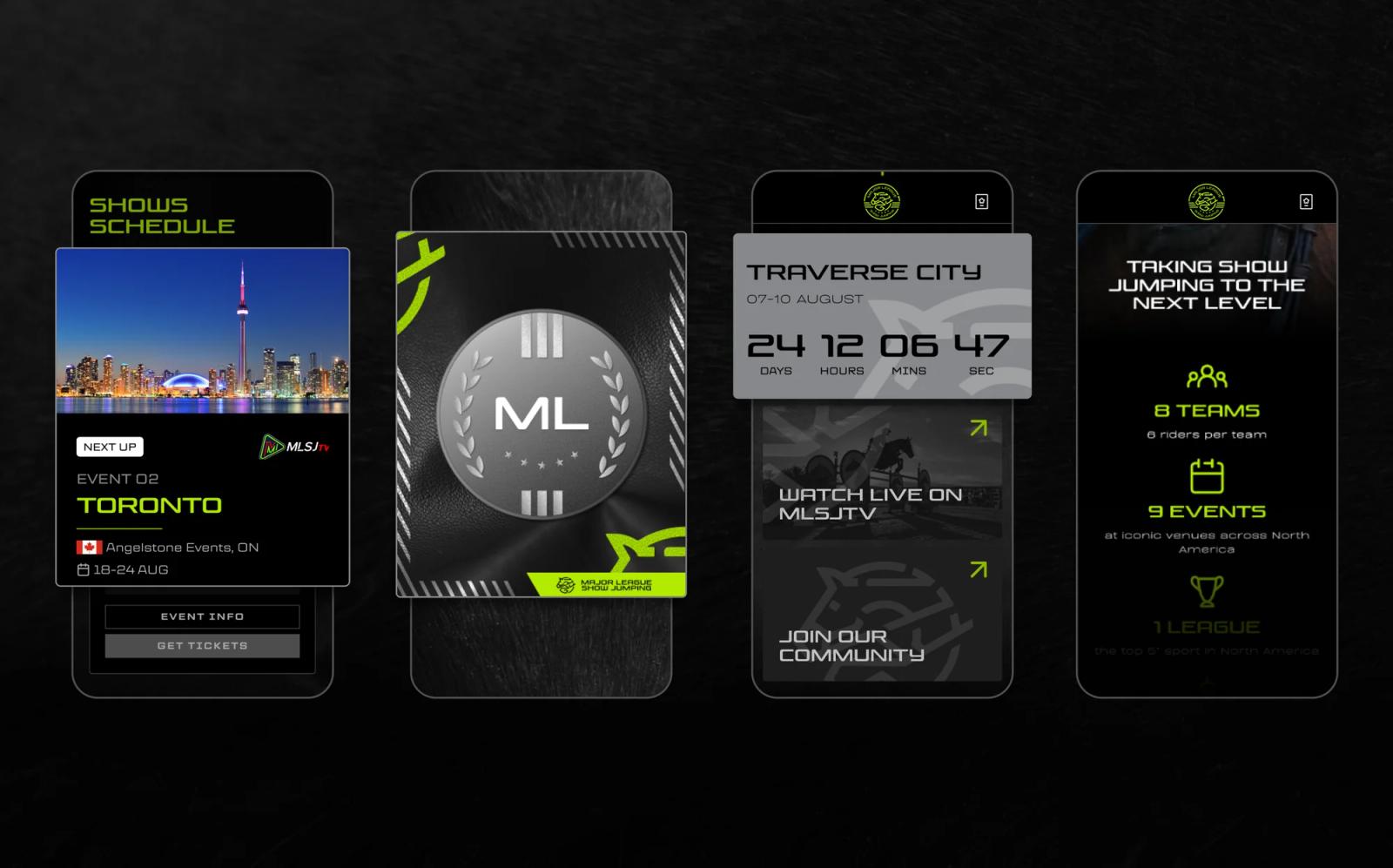
What we built
01 · Brand + site/app
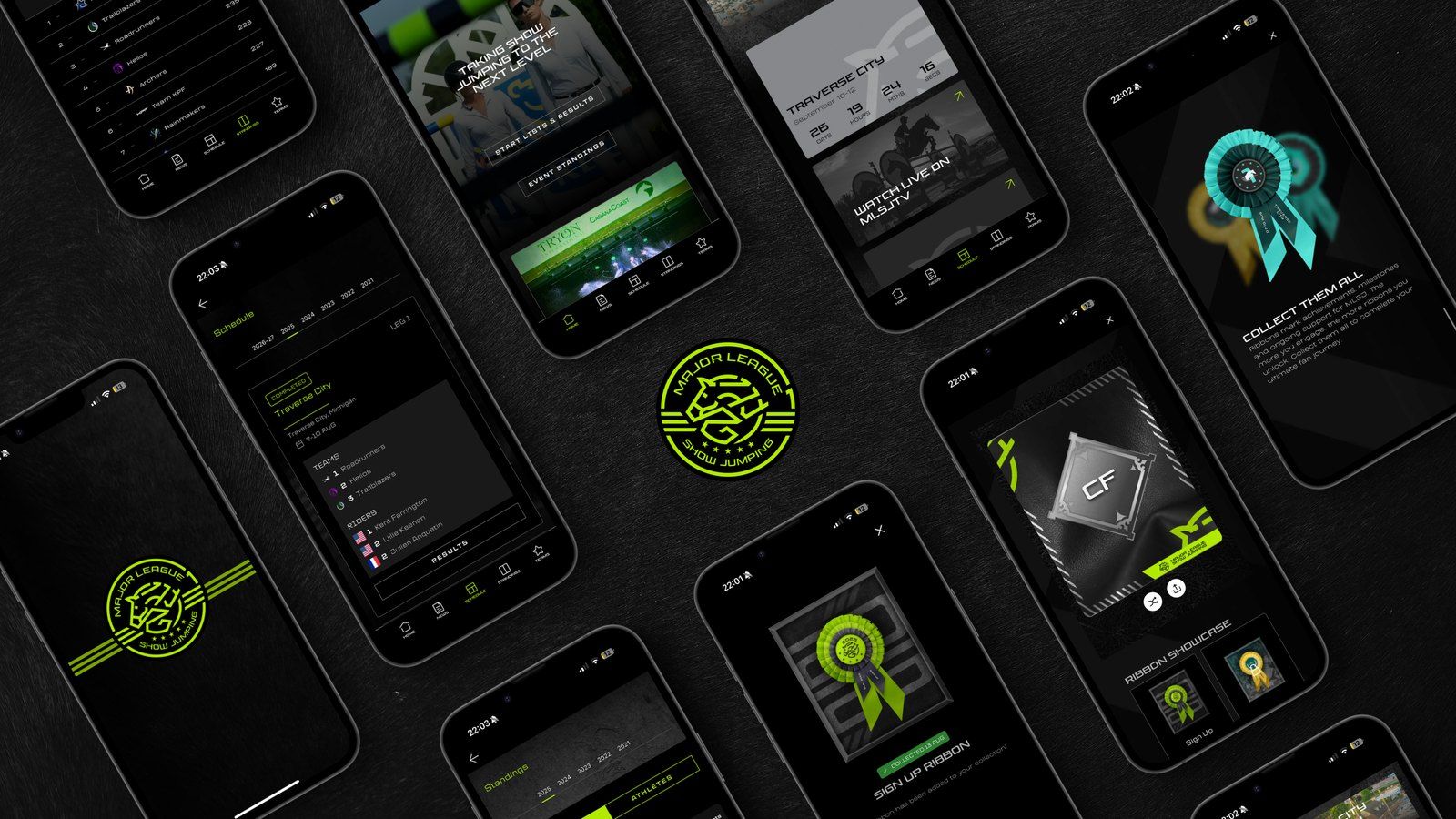
A new brand to make MLSJ stand out. Off the industry's default blue, without giving up the polish a CSI5* circuit calls for.
02 · Data platform
The league's results arrived as event paperwork, scattered across sources. We built the pipeline that reads it, derives the stats behind every standing and result, and writes them into the database the site and app run on. Now a newcomer can follow a class, a longtime fan can track their riders, and the league has something to say about every event.
03 · Real-time stats
Standings, stats and the running order all update as a round happens, pulled from the data platform. Knowing who's about to go turns a class into something to watch rather than something to check.
04 · Profile card
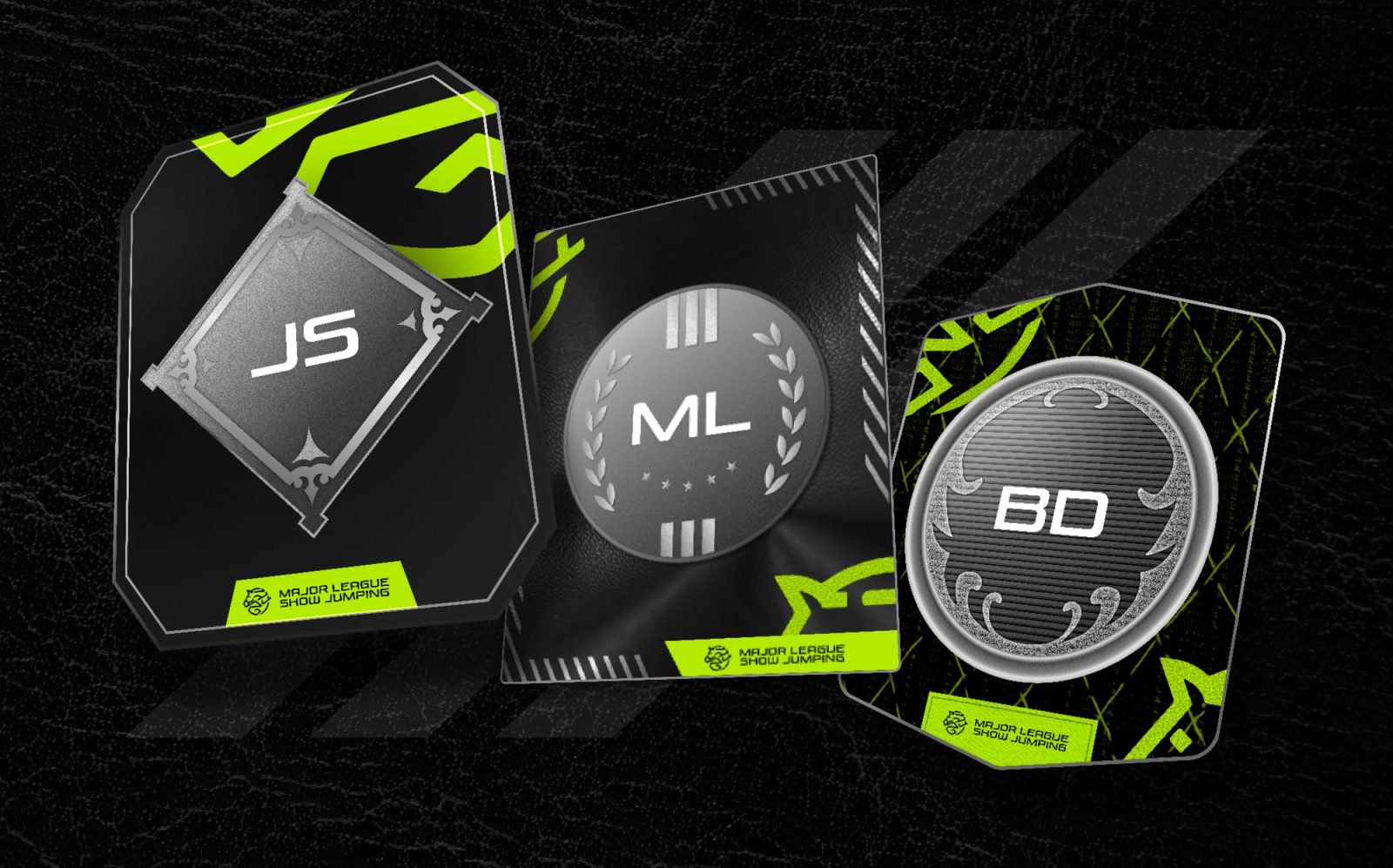
A league can't do much with an anonymous audience, and nobody fills in a form for nothing. So signing up earns a personal crest: initials framed by jump poles or laurels, drawn from the sport's own monograms. Each one turns a visitor into someone the league can name, count and reach.
05 · Collectible rosette cards
Collectibles give people a reason to come back, and rosettes already mean something in show jumping. A fan who follows the season ends up with a set of them rather than the same card over and over.
The result
Fans · registered
21.47K
Made an account, since launch.
Visits · lifetime
107.9K
Across web and app, since launch
Mobile · share of visits
36.8%
Fans carrying the league with them, not just clicking a link
The growth it was ready for
MLSJ was already a real league with real fans: a genuine circuit, serious prize money, the best riders in the discipline. What it didn't have was a platform that could grow that audience or hold onto it.
Five things changed that: a brand that stands apart in the sport, stats built out of event records, live scores that show what's coming, a card worth signing up for, and a collectible worth coming back for.
Slytrunk. Slytrunk designed and built Major League Show Jumping's fan engagement footprint on top of the Fan Capital platform, which Slytrunk also developed. Slytrunk led brand, website, app and graphic design.
MLSJ is a CSI5* show jumping circuit built since 2021, running eight to ten events a season with $12M in prize money. It chose bigger events over more of them.
Slytrunk built the data pipeline behind it. Dispersed sources and event entry sheets are parsed into a structured database, with derived stats the league did not have before. Live standings, those stats, and the order riders enter the ring all update as a round happens.
Every competition has its own collectible card designed as a custom rosette, unique to its location in colour, pattern and detail. Fans start with a profile card carrying their initials at the centre, framed by jump poles or laurels, then collect a different rosette for each event they follow — so a season becomes a record rather than a login.
Contact
Next