Julia Putzeys · Product
Watching before building
We started by learning how fans actually followed the league before deciding what to build for them.
Case Study 03
Partner
NBA
Category
NBA • Basketball
Engagement
2022 to present
Scope
Who built it
Julia Putzeys · Product
We started by learning how fans actually followed the league before deciding what to build for them.
Philip Paek · Design
We carefully crafted the UI to put the player at the center of the screen.
Phil Flores · Frontend Engineer
We connected all the dots into a single app that showcased the league's talent.
The starting point · Where we came in
The audience was already there: scouts, families, hometown crowds, and NBA fans who wanted to see a name before the player got called up. The app they had reported scores and stats and not much else, and it ran on an aging platform.
So the NBA asked us to rebuild it. We started over for iOS and Android on one React Native codebase and launched for the 2023 season. Then we ran it, season after season.
The part everyone skips
A development league invites that shortcut. Shrink the big-league app, swap the logos, ship it. It would have worked, and it would have missed what the G League actually is.
The G League's whole story was the climb. A story about players trying to earn the next level, night after night, and a lot of them making it. An app built around team operations told the league's story from the front office. That was not whose story this was.
The idea we brought
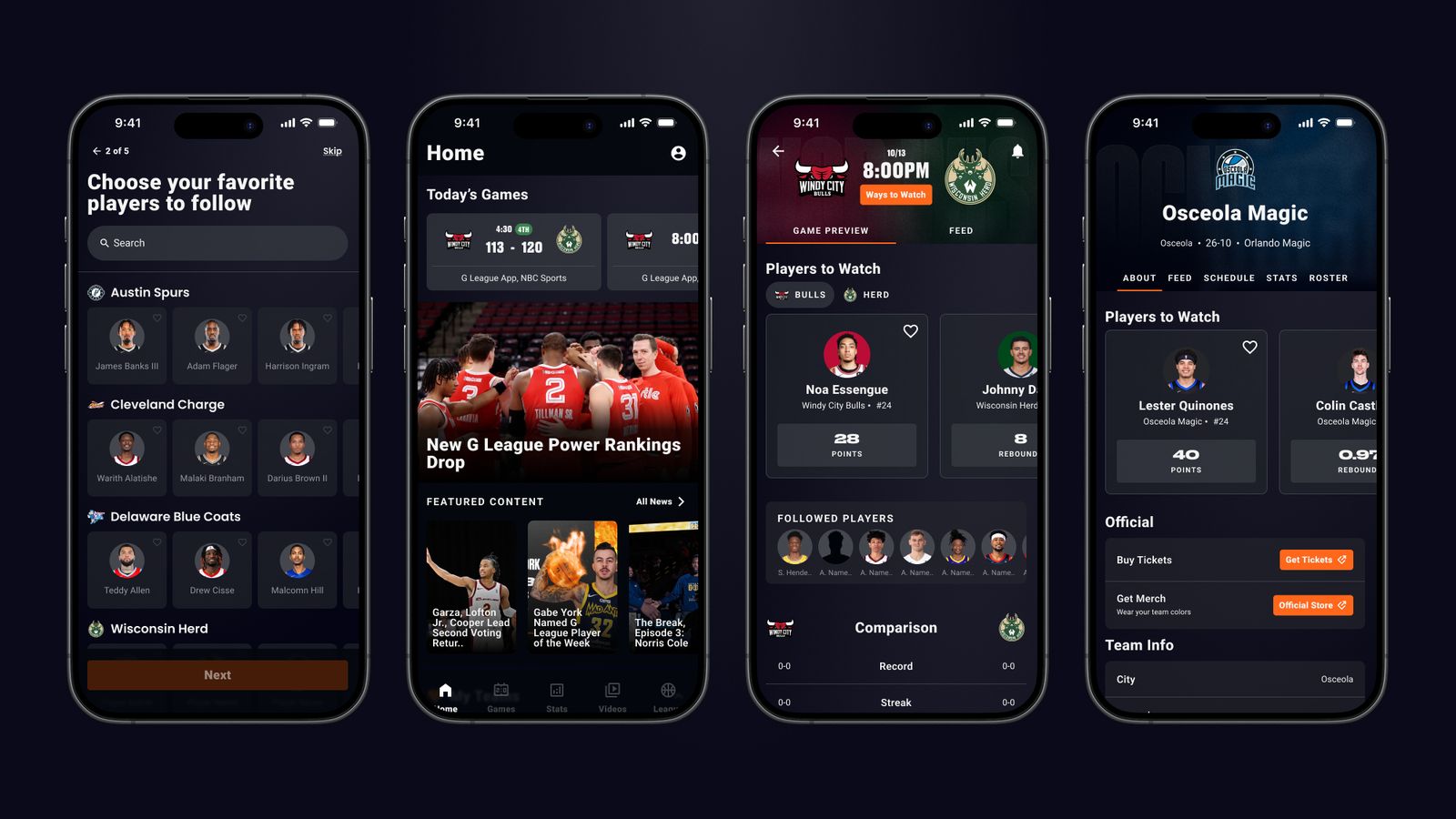
We started where the audience already was — following players, not teams or standings. That wasn't one feature, it was the whole app: built around who you followed, not who you rooted for.
What we built
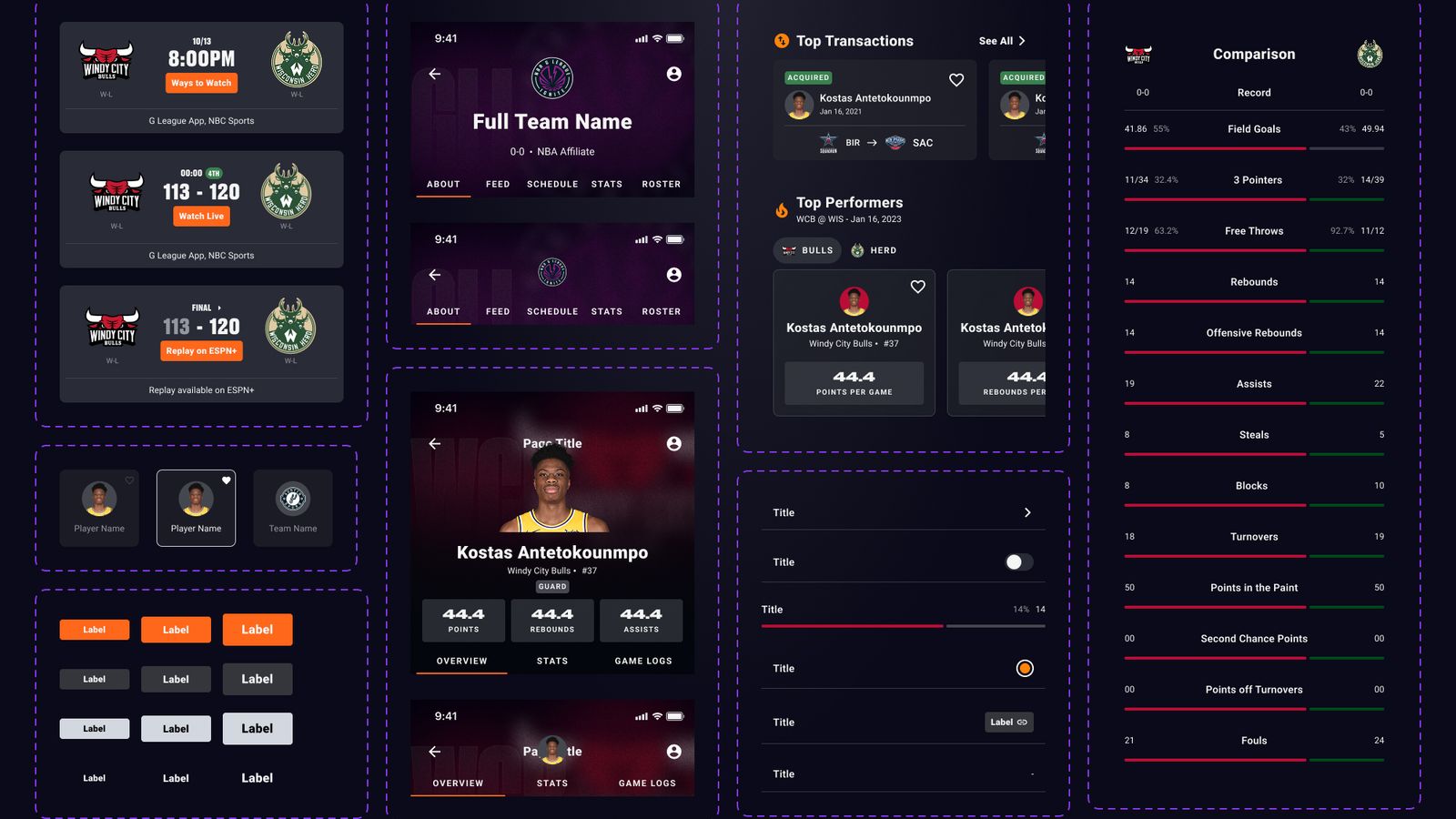
01 · Design System
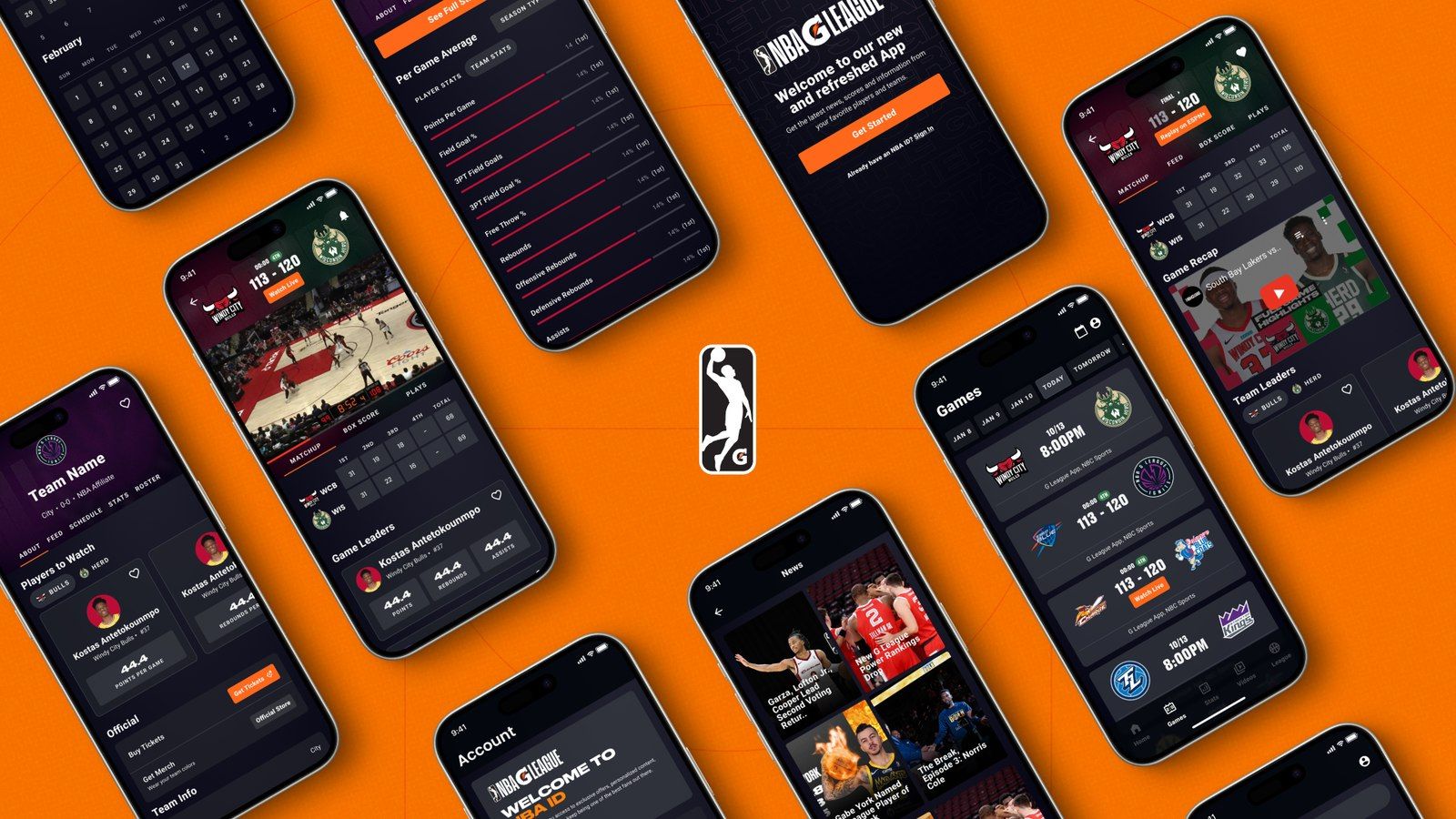
The UI was never a set of one-off screens. We built it atomic: a documented, reusable component library that could absorb new features and new seasons without a rebuild. It's how we approach every build, not just this one.
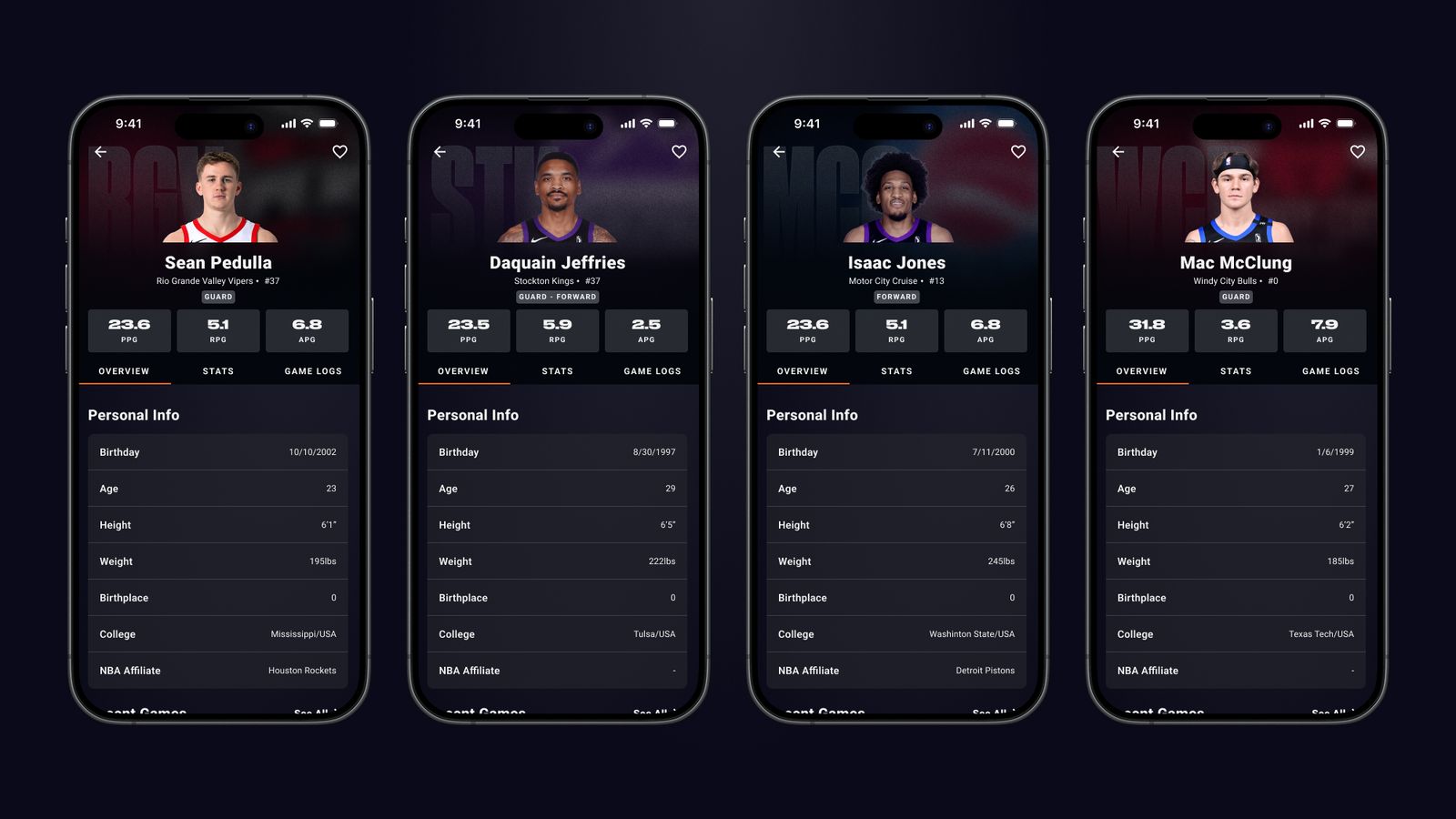
02 · Player-Focused Experience
Following a player wasn't one screen, it was the whole app. Navigation surfaced who you followed first; game pages opened with stat leaders; team pages led with players to watch.
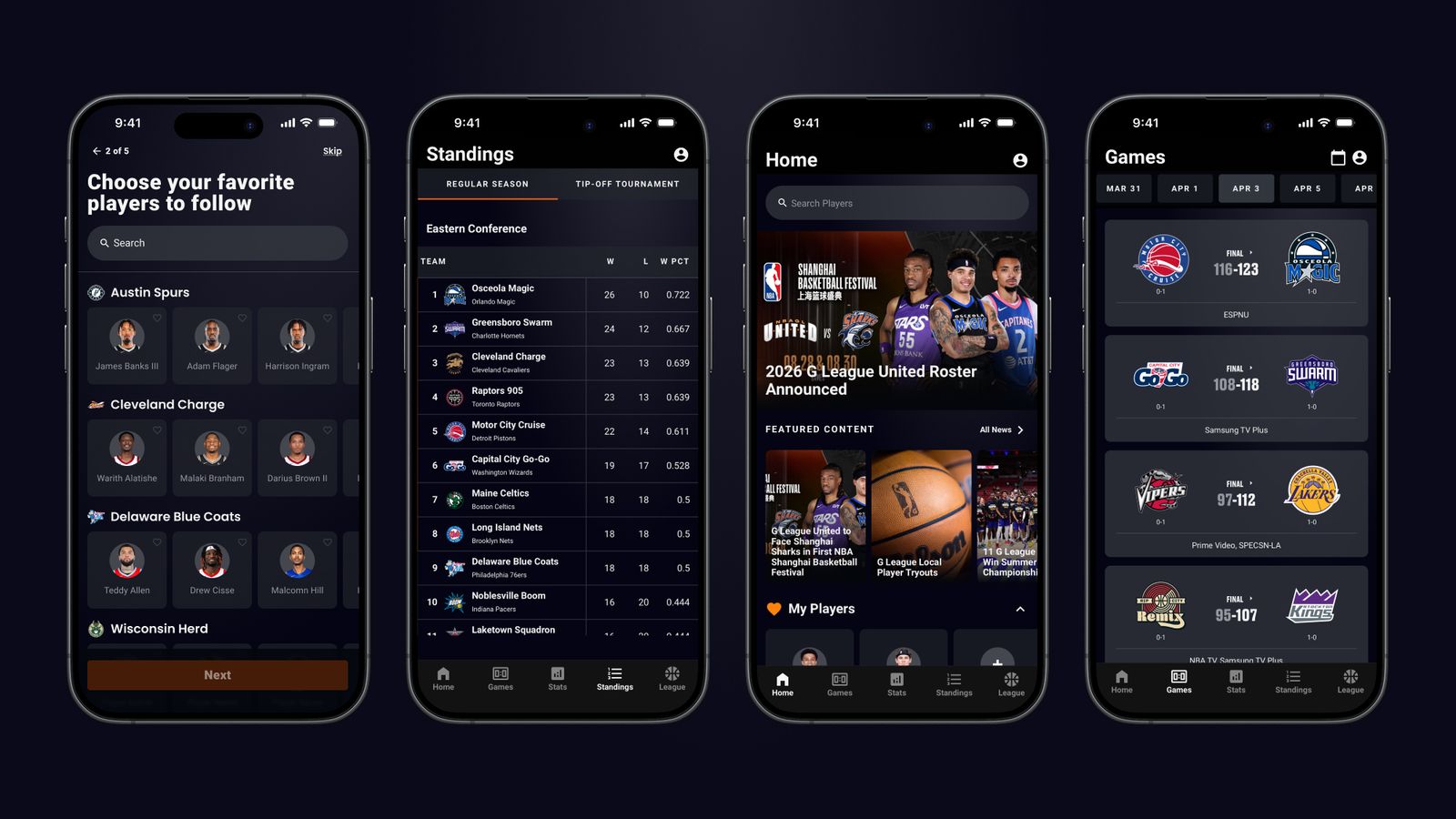
03 · The League
Standings, schedule, teams, and news, all in one place — so following the G League meant following a season, not just checking a score. The conference table was the screen that brought people back mid-week.
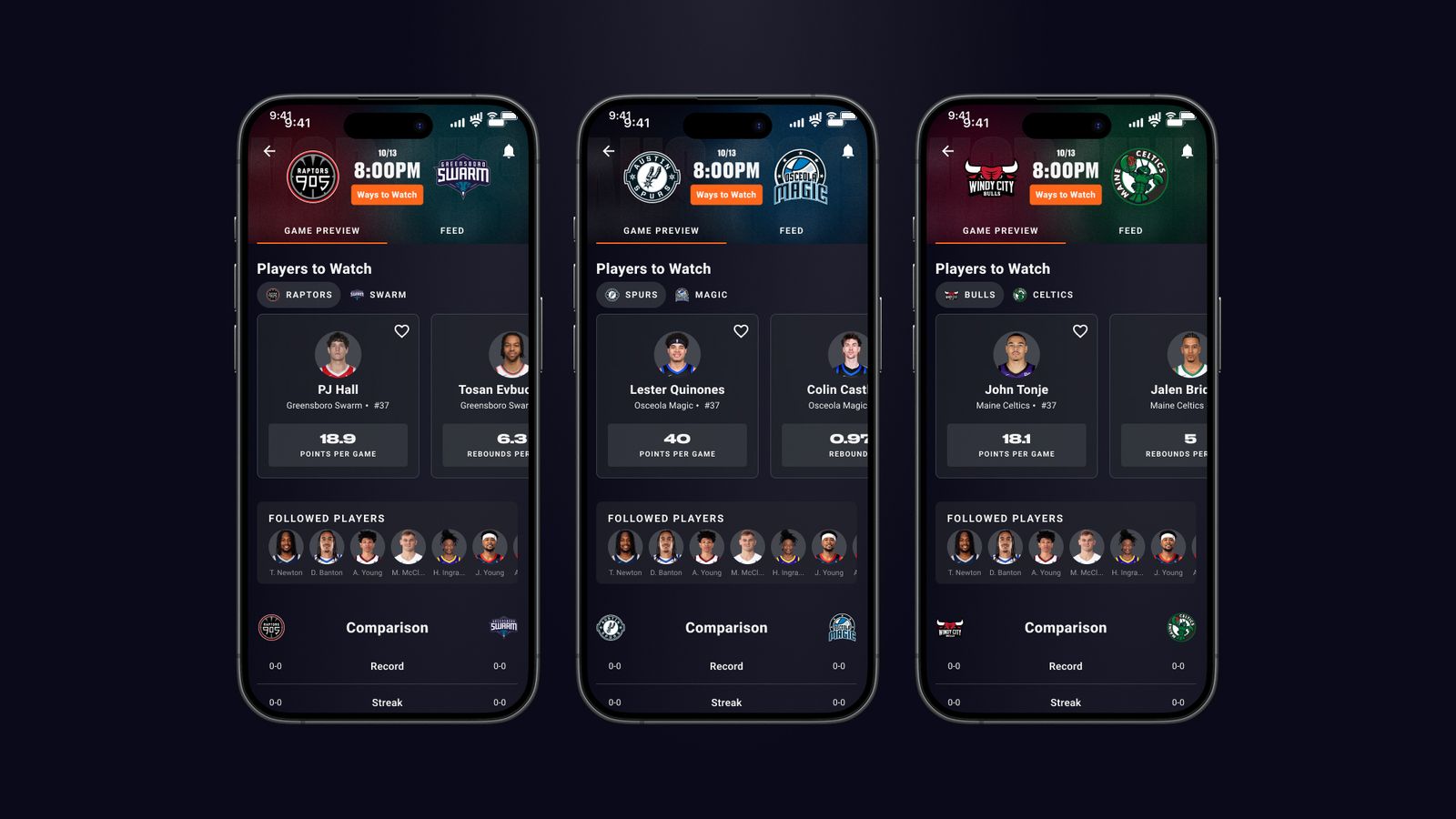
04 · Game Night
Score, clock, and the live feed in one screen, with Watch Live sitting on top of the broadcast. Every G League night, on the phone in the arena and the phone on the couch.
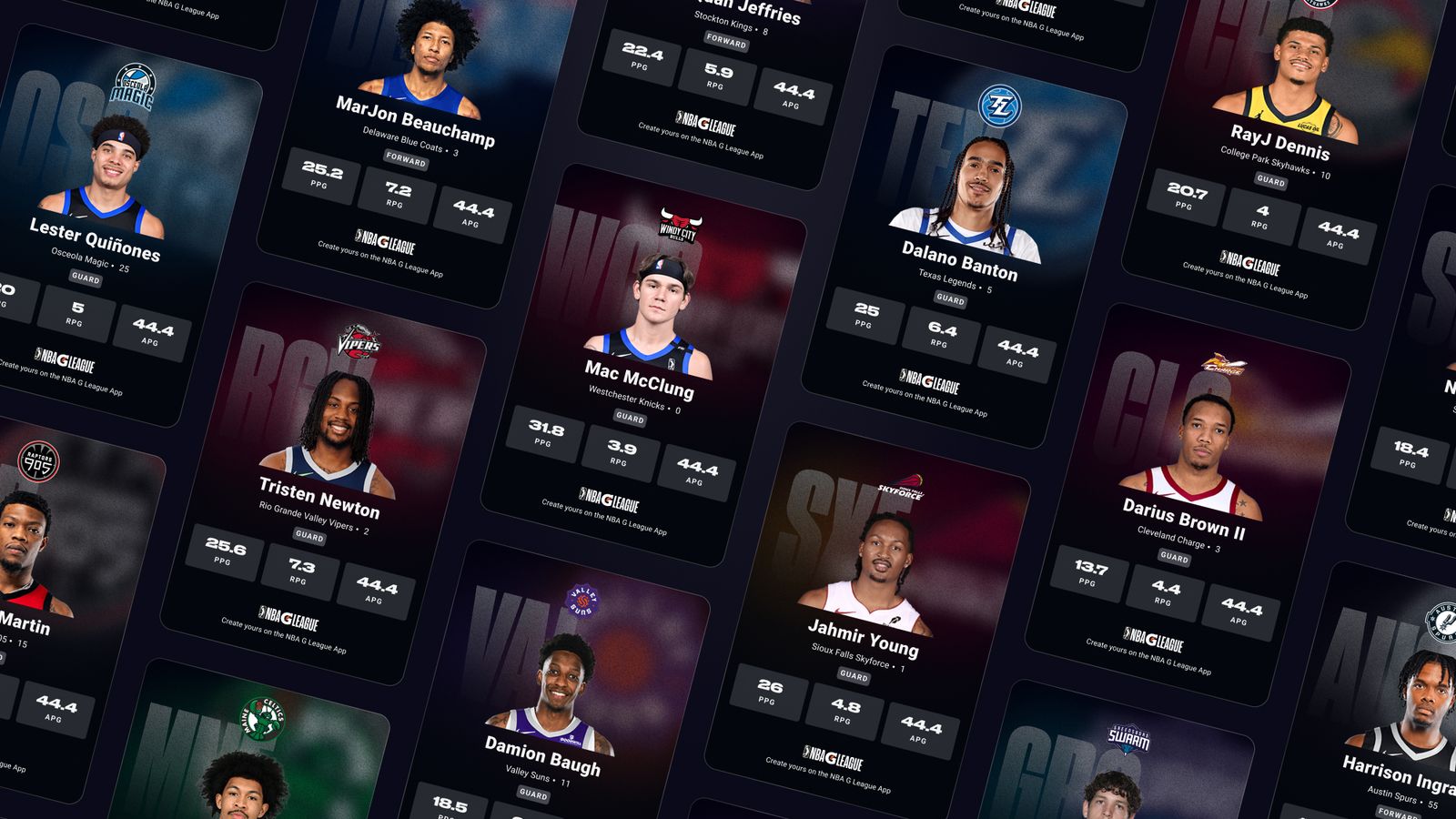
05 · Shareable Player Cards
Every player got a card built to leave the app — stats, team colors, and a look worth posting. A fan didn't need to explain who they were talking about. The card did it for them.
Discover, design, build, then run it live. Each season fed the next.
01 · Discover and design
Learn how fans follow, then build the system.
Behavior first, assumptions second. Here, that meant learning that G League fans follow players, not teams.
02 · Build once
One React Native codebase, both stores.
One codebase, every platform, from day one. Here, that meant iOS and Android shipping together, not one trailing the other.
03 · Run it live
Game night was the deadline that kept coming.
A launch is a milestone, not a finish line. Here, that meant crash watch and support, season after season since 2023.
The Result
Seasons · since 2023
3
Live across three G League seasons
Platforms · One Codebase
2
iOS and Android, built in React Native
One team, not a vendor
The design system and the React Native build were not a handoff between two companies. They were two disciplines in one shop, on the same screens, through discovery, launch, and every season after.
That is what let the app keep its point of view. Players over teams held up because the people who drew it and the people who built it were on the same team.
Slytrunk. The NBA asked Slytrunk to rebuild the G League app from scratch, on one React Native codebase serving both iOS and Android. It launched for the 2023 season, and Slytrunk has run it every season since.
It was built for team operations rather than for fans. It reported scores and stats and not much else, and it ran on an aging platform. The rebuild started from how G League fans actually follow the league: by player, not by team.
It is the whole app, not one feature. Navigation surfaces the players you follow first, game pages open with stat leaders, and team pages lead with players to watch. Every player also gets a shareable card built to leave the app — stats, team colours, and a look worth posting.
Product strategy, app design, and the React Native build for iOS and Android. That included a documented, reusable design system, the league section covering standings, schedule, teams and news, the game-night screen carrying score, clock, live feed and Watch Live, and the shareable player cards.
Since 2022. The app launched for the 2023 season and has been live across three G League seasons, with Slytrunk handling crash watch and support season after season.
Contact
Next