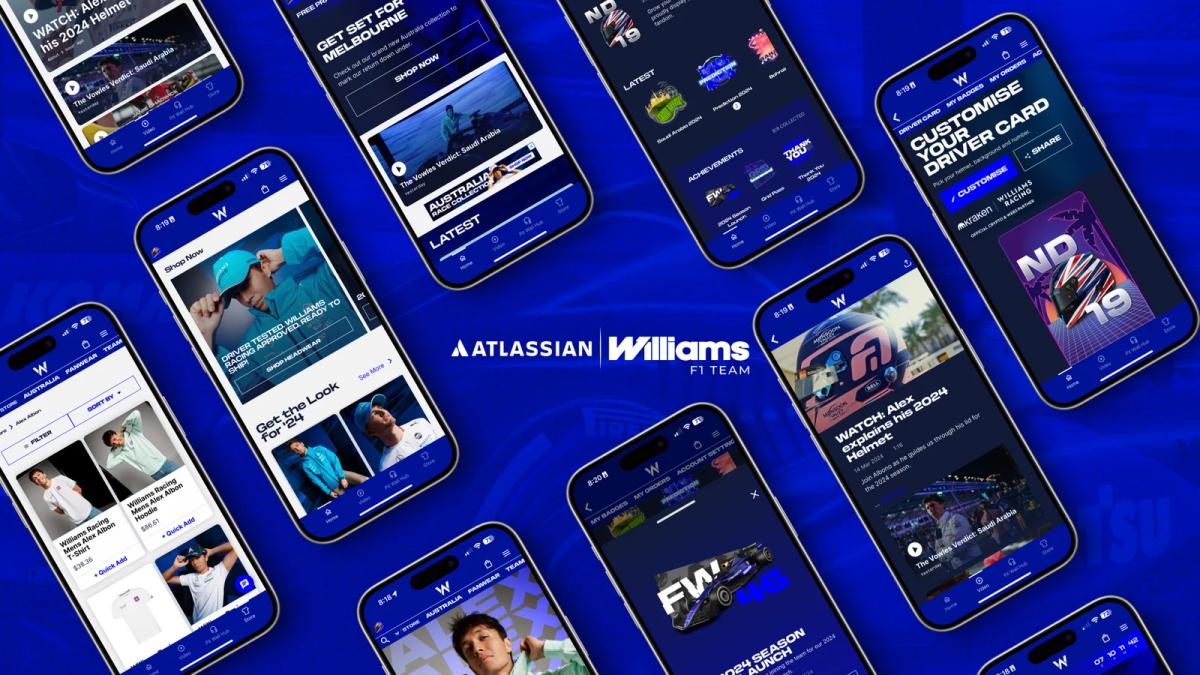
01 · Ride modes
Ride mode selection and creation
Ten custom ride modes, tuned for speed, torque, regen and braking, and saved to switch between mid-ride.
Case Study
Partner
Zero Motorcycles
Category
Electric Motorcycles
Engagement
2019 to 2023
Delivered
Slytrunk services
2019 · The starting point
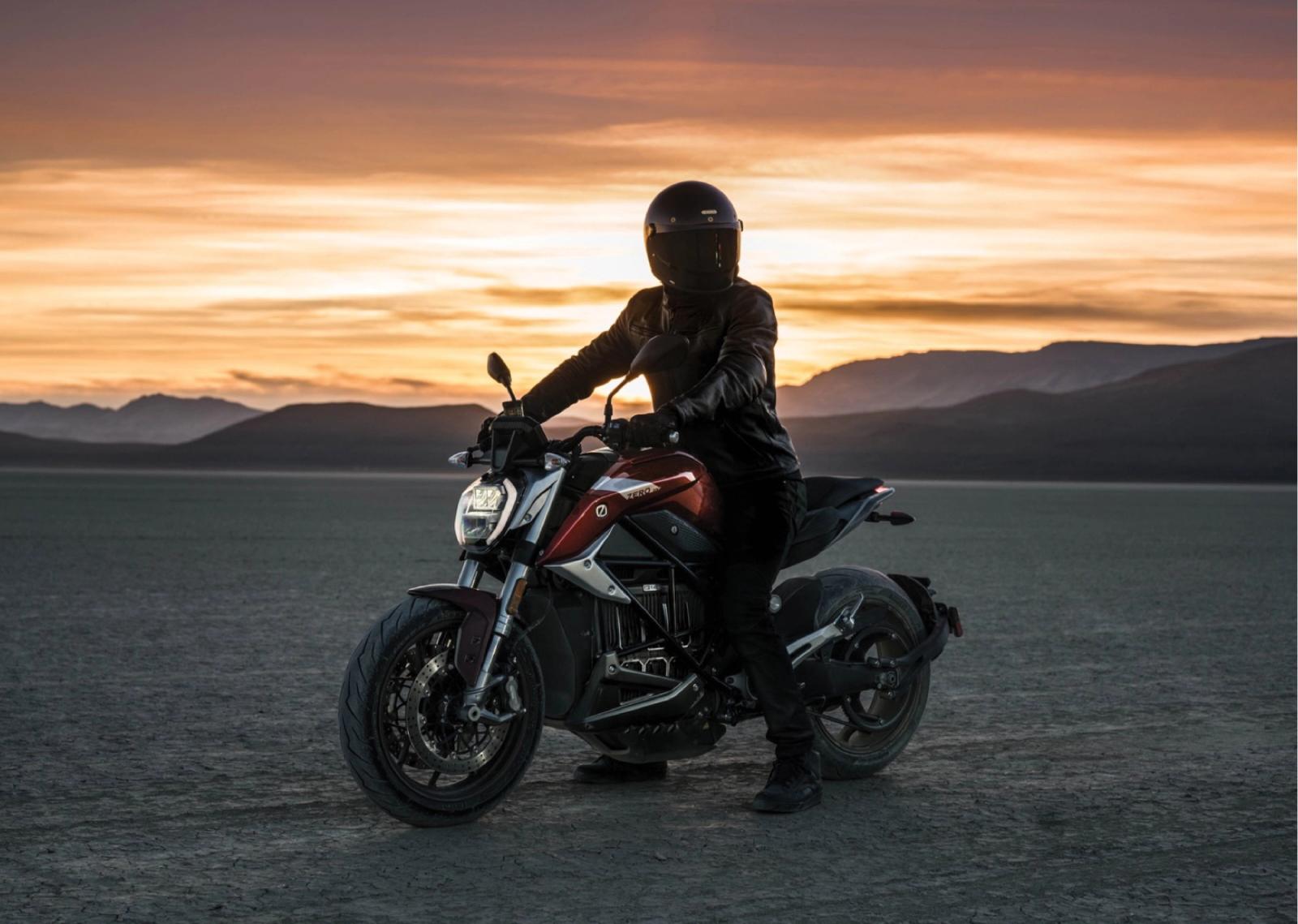
Zero Motorcycles started in a Santa Cruz garage more than a decade ago, building all-electric motorcycles that skip the genre's usual pitch. No deafening engine, no hyper-masculine styling — just instant power and zero emissions, sold on confidence instead of noise.
Their next bike, the SR/F, was built to prove the point further: cellular and Bluetooth wired straight into the hardware, pitched by Zero's own CEO as the world's first fully connected ‘Smart’ Motorcycle. The hardware was ready. The software that was supposed to make it ‘smart’ didn't exist yet — that's what Zero brought us in to build.
The harder problem
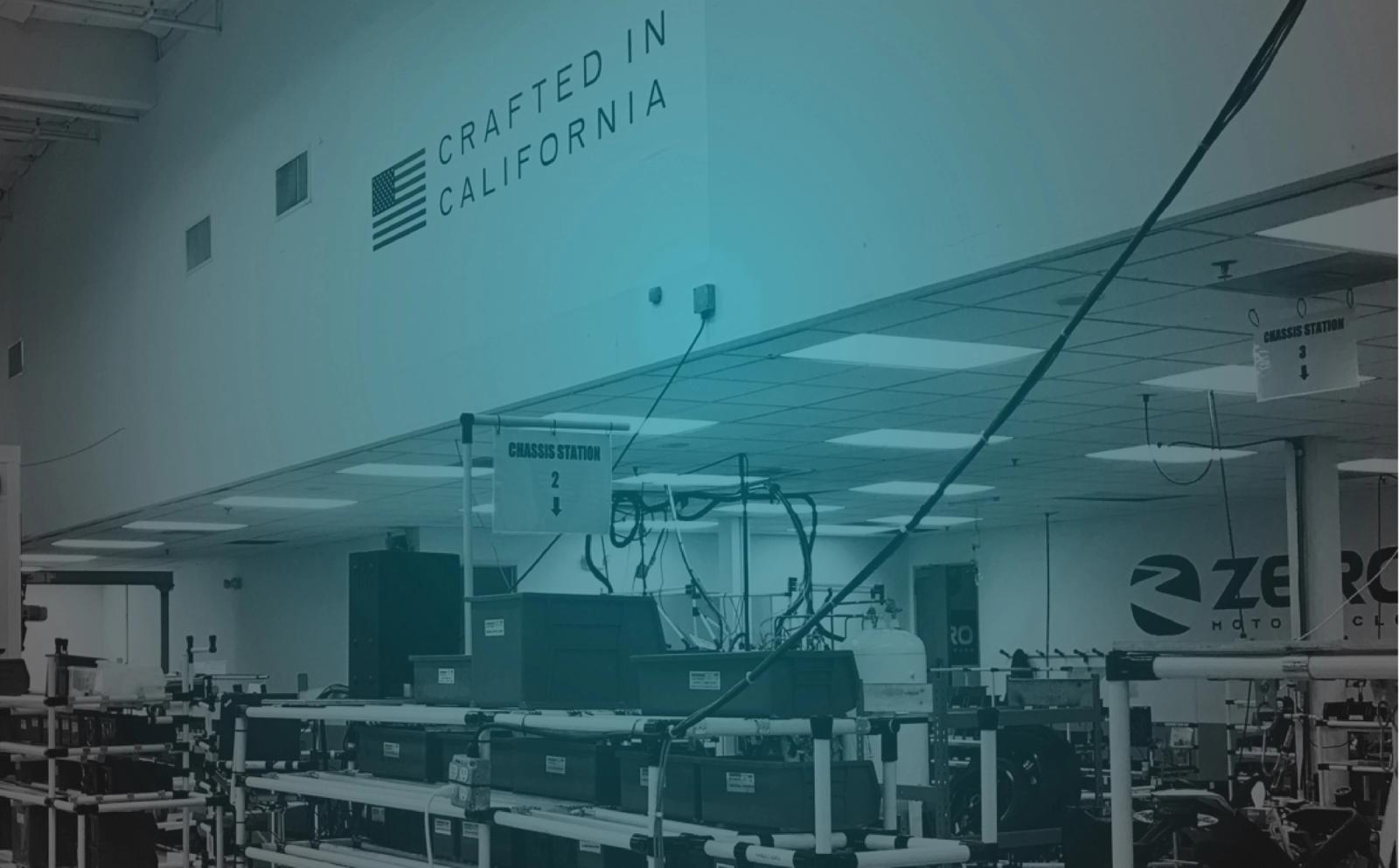
Getting started meant walking the production line at Zero's Scotts Valley HQ, where every motorcycle is hand-assembled out of aircraft-grade aluminum to tolerances that leave no room for guessing. It was immediately clear this wasn't a standard software project.
The obvious build — a companion app with a status screen, a settings menu, some Bluetooth toggles — would have undersold everything happening on the production floor. Confidence like that isn't built on gimmicks, and a generic app would have been exactly that: a gimmick riding on top of real engineering.
The idea we brought
The fix wasn't a longer feature list — it was refusing to treat the app and the dash as separate deliverables. Both needed to run on Cypher III, Zero's own motorcycle firmware, so the phone in a rider's pocket and the 5-inch display on the handlebars would always agree with each other and with the bike.
That meant designing to each screen's own strengths instead of mirroring one on the other: the app carries everything that benefits from more space and more time — ride history, charge scheduling, sharing a ride afterward — while the dash stays legible at speed, in daylight, in one glance.
What we built
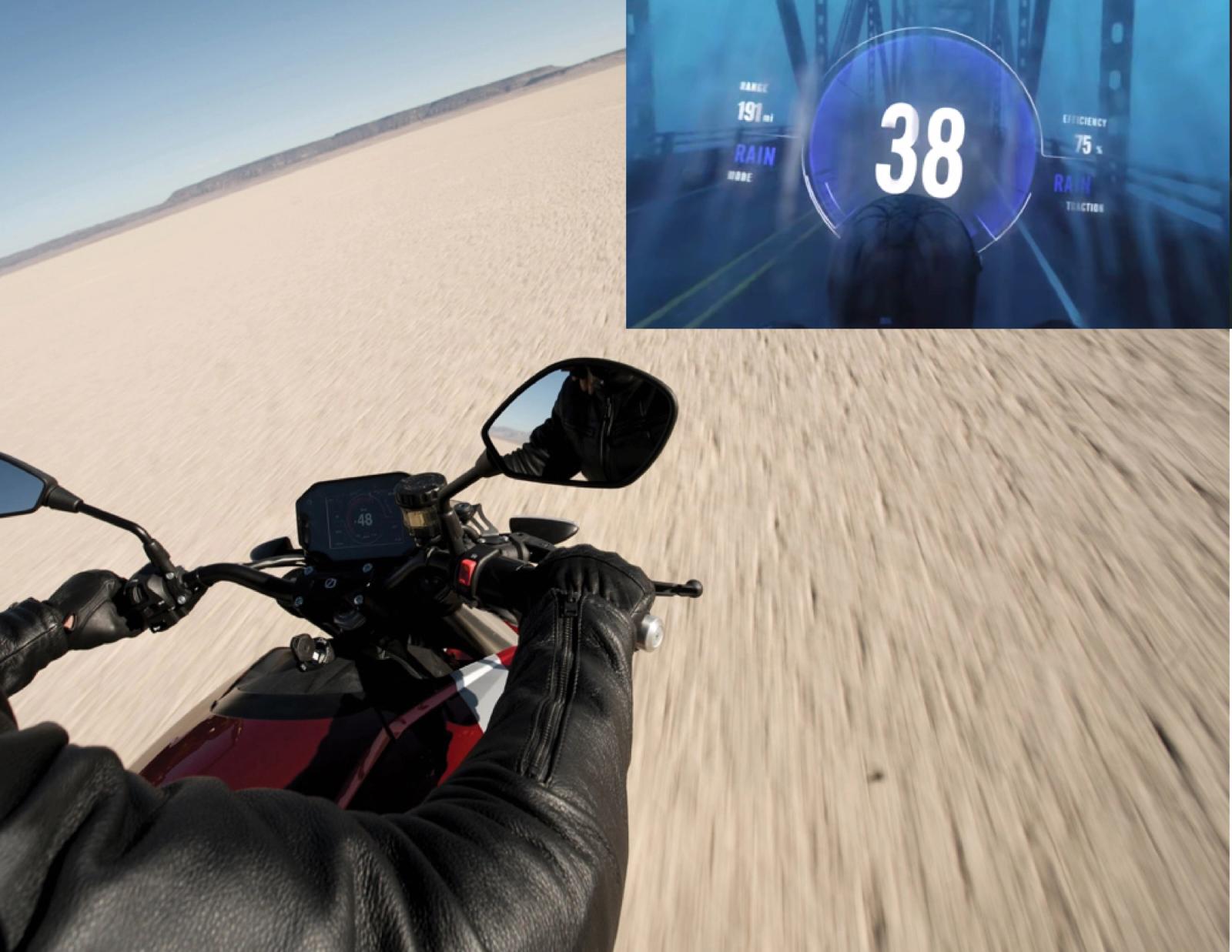
01 · Ride modes
Ten custom ride modes, tuned for speed, torque, regen and braking, and saved to switch between mid-ride.
02 · Personalization
Riders assign gauges to each quadrant of the dash and pick a colour theme, right down to what shows up on a 5-inch display doing 80mph.
03 · Charging
Targeted charge levels, scheduled charge windows, live charge status and charge-station lookup, all set remotely from the app.
04 · Ride data
Speed, lean angle, power, torque, and energy regenerated — logged automatically and ready to replay.
05 · Replay
Full playback of a ride's data overlaid on its route — not just a summary screen, the whole ride, second by second.
06 · Sharing
Riders drop their stats onto a route map or a custom photo and share the ride, not just the number.
The other screen
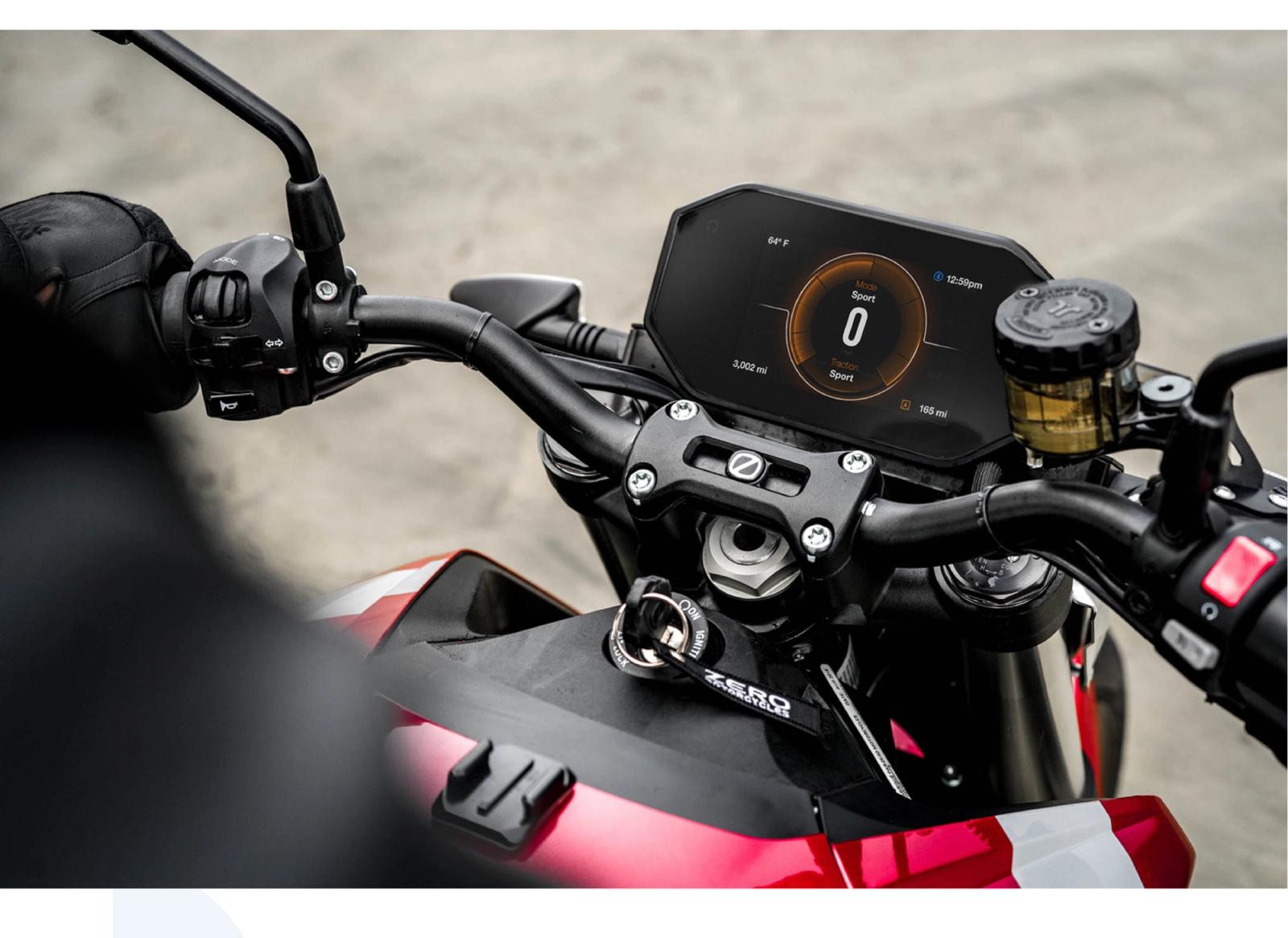
The app wasn't the only interface launching with the SR/F. We designed a Bluetooth-connected digital dash that had to look forward-facing without losing the visceral, mechanical feel of an actual motorcycle instrument cluster.
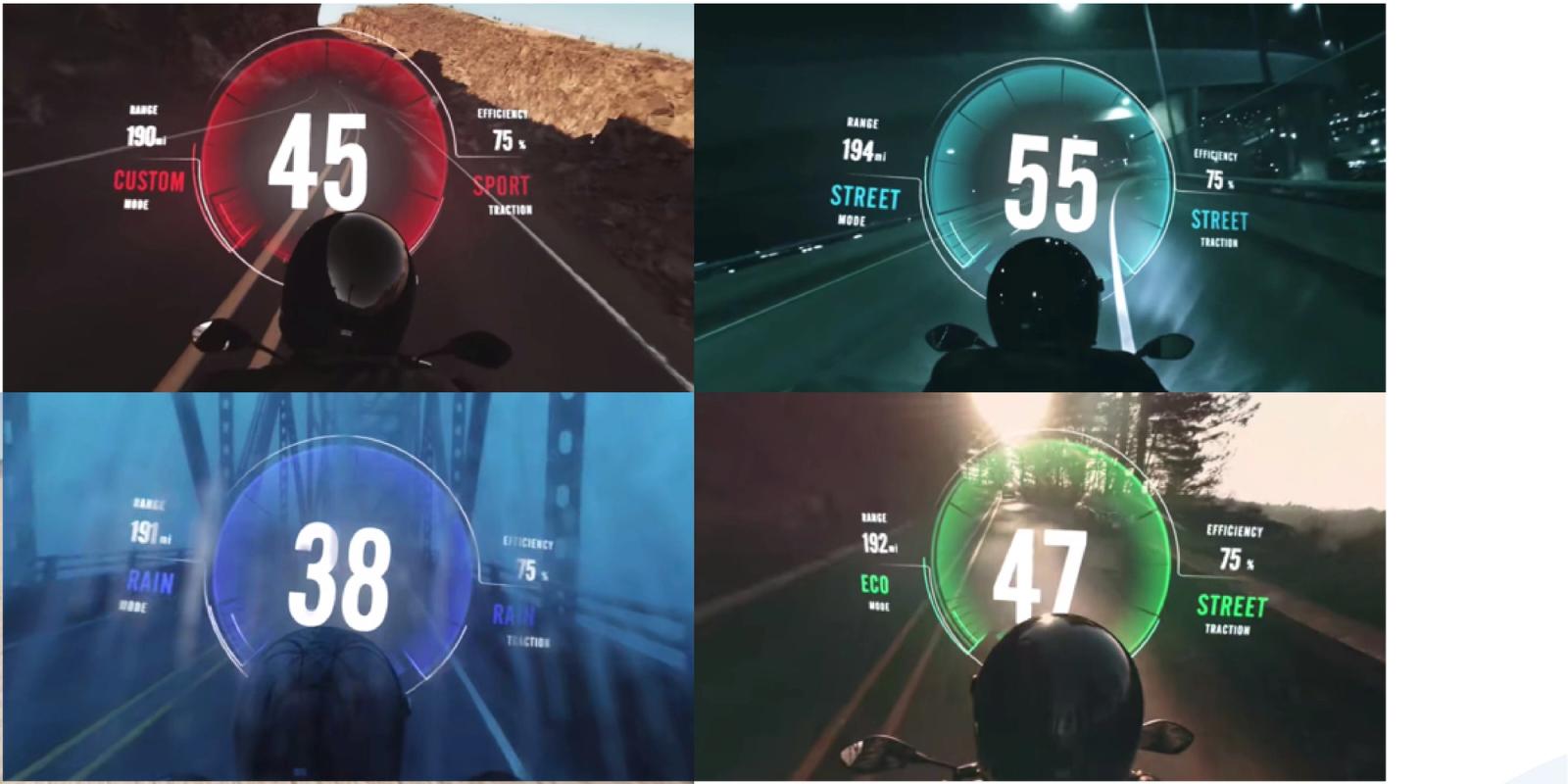
Getting the balance right meant treating the dash and the app as complements, not copies — legible in a glance while riding, deep and configurable when parked. Four ride-mode colour themes carry over from the dash's 5-inch LCD to the app itself, so switching modes on the bike and checking them later on the phone always looks like the same product.
Since launch
Following the SR/F's release, Zero kept us on to maintain and extend the app and dashboard experience as part of their broader product roadmap — the same two-screen ecosystem, still running on the firmware it was built for.
A motorcycle that sells on silence instead of noise needed software that didn't need gimmicks to prove it either. That's still the brief.
Slytrunk. Zero brought Slytrunk in to build the companion app and the digital dashboard for the SR/F, covering product management, interaction and visual design, engineering and project management. Both launched with the bike in 2019.
An all-electric motorcycle with cellular and Bluetooth wired straight into the hardware, pitched by Zero's own CEO as the world's first fully connected ‘Smart’ Motorcycle. The hardware was ready before the software meant to make it smart existed — that is what Slytrunk was brought in to build.
Ten custom ride modes tuned for speed, torque, regen and braking. Remote charge management with targeted levels, scheduled windows, live status and charge-station lookup. Automatic logging of speed, lean angle, power, torque and energy regenerated. Full ride replay, and sharing built on top of it.
Yes. Slytrunk designed the Bluetooth-connected 5-inch digital dash alongside the app, with both running on Cypher III — Zero's own motorcycle firmware — so the phone in a rider's pocket and the display on the handlebars always agree with each other and with the bike. Four ride-mode colour themes carry across both.
Ride replay. Full playback of a ride's data overlaid on its route, second by second, rather than a summary screen.
Contact
Next